26 May 2024
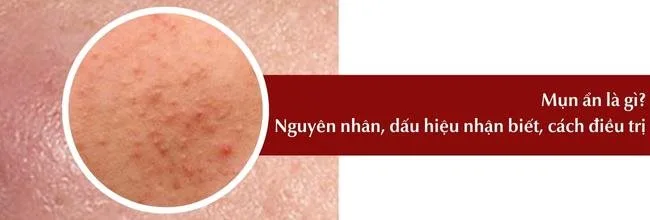
Hidden acne consists of clusters of tiny bumps that form beneath the skin. They make the skin's surface rough, uneven and less attractive. Hidden acne isn't painful, but it is considered a stubborn type of acne that is very hard to clear completely. Worse still, handling hidden acne the wrong way increases the risk of infection and can turn it into inflammatory acne. In this article, let's explore with Lunaria what hidden acne is, why it forms and the most effective ways to treat it.
1. What hidden acne is, its signs and how it progresses
Acne is a skin concern almost everyone experiences, and hidden acne is one of the most common types. It should be distinguished from blackheads, whiteheads and so on. Hidden acne is not swollen or inflamed and has no visible head, because the plug sits deep inside the hair follicle. These bumps are only slightly raised on the surface and usually appear in clusters rather than scattered across the face.
To treat acne effectively, you need to be able to tell the different types apart. Hidden acne sits deep beneath the skin, with the plug lodged inside the follicle below the surface. It usually appears in clusters of tiny bumps and is generally not inflamed or swollen.

Hidden acne sits deep beneath the skin, leaving the surface less smooth (Source: Internet)
Because hidden acne lies deep under the skin, it is hard to spot with the naked eye, but when you run your hand over it you can feel that the surface is rough, bumpy and uneven. To identify hidden acne accurately, look for the following signs:
- Skin with hidden acne has small rough bumps that are not inflamed or swollen.
- The bumps are white, close to your natural skin tone, or red.
- Hidden acne tends to appear most on the forehead, cheeks, under the chin, around the mouth and along the jawline.
- The bumps usually grow in small clusters.
- You may feel mild pain or discomfort on and around the bump.
- The bump becomes swollen, larger, inflamed and slightly red (hidden acne developing into a comedone or inflammatory acne).
Things to note:
- – Some whiteheads or blackheads develop from hidden acne, moving up through the layers of skin and forming on the face.
- – Anyone can learn to recognise the symptoms of hidden acne on their own.
How hidden acne progresses:
Hidden acne is essentially a cyst that forms from a build-up of oil, dirt and bacteria trapped inside the pores. In that sense, it is the same in nature as ordinary acne, except that it sits below the skin's surface. It can be recognised indirectly when the surrounding skin feels inflamed, tender and possibly red. And because it lies deep in the skin, it is harder to treat. Like ordinary pimples, it can appear anywhere on the face. However, if there are a large number of hidden bumps, the person may be dealing with a more serious form of acne known as cystic acne.

Unfortunately for anyone with hidden acne, if these troublesome bumps stay buried beneath the surface, it can take several months for them to disappear completely. That said, each person's skin condition usually determines how hidden acne progresses. If a hidden bump becomes inflamed, it may make its way up to the surface on its own and resolve more quickly.
On the other hand, if the bump stays put beneath the skin, things get worse. At this point, cystic acne becomes the next stage of hidden acne: an infection under the skin that causes inflammation and rarely surfaces. Treating this skin condition is quite difficult.
2. What causes hidden acne
Hidden acne forms beneath the skin for a variety of reasons. Here are some of the main causes:
2.1 Improper cleansing
Every day your skin is exposed to many harmful factors such as dirt, air pollution and makeup. If your skin isn't cleansed thoroughly, these impurities build up and create the conditions for bacteria to move in and cause breakouts. Cleansing must also be done correctly, avoiding harsh scrubbing that damages the skin.

Suggested product: Special Cleansing Gel – a soap-free foaming cleanser for a deep clean
2.2 Hormonal imbalance causing hidden acne
Hormonal imbalance makes the sebaceous glands produce more oil, which combines with dirt to clog pores and cause hidden acne. Hormonal imbalance typically occurs during puberty, pregnancy or around your period.
2.3 Hidden acne caused by an unhealthy lifestyle
Unhealthy habits such as staying up late, not getting enough sleep, drinking alcohol and smoking can all cause hidden acne. In addition, a diet lacking in nutrients or high in fat, spicy food and sweets also affects the skin and increases the risk of breakouts.

2.4 Using unsuitable or poor-quality cosmetics
Using cosmetics that don't suit your skin, poor-quality products or overusing cosmetics can irritate and damage the skin and clog pores. This gives bacteria the opportunity to invade, attack and cause acne.

Poorly cleaned makeup tools can cause hidden acne
Hidden acne can also be caused by makeup tools that aren't cleaned regularly, such as brushes, powder puffs and sponges. Take a moment to check whether the cosmetics you're using clog your skin or whether your tools are being cleaned properly. If your hidden acne just won't clear up, try stopping the products you're currently using to pinpoint exactly which one doesn't suit your skin.
2.5 Environmental factors
Sunlight, dust, smoke and pollution are all harmful to the skin. Your skin is exposed to them every day, and if they aren't cleansed away they build up inside the pores, causing blockages and hidden acne.
2.6 Hidden acne due to skin type
Anyone can get hidden acne; how much you get depends on your skin's characteristics. People with oily or sensitive skin are usually more prone to hidden acne because excess oil clogs the pores and leads to breakouts.
3. Where hidden acne usually appears
Hidden acne can appear in many different areas of the face. Closed comedones are most commonly found in the following areas:
3.1 On the forehead
The forehead is rarely covered or protected, so it is usually the most exposed to external factors. Many people also tend to touch their forehead, and fringes can stick to it with sweat, which also increases the risk of hidden acne. To check whether you have hidden acne on your forehead, wash your hands thoroughly, then gently run them over your forehead, or notice whether your foundation looks less smooth after applying makeup.

Closed comedones often appear on the forehead (Source: Internet)
3.2 The chin area
The skin on the chin is also touched by the hands more often, allowing bacteria to get in and cause breakouts. Hidden acne under the chin can grow in clusters, and extractions are difficult because of the area's uneven contours.

Acne on the chin (Source: Internet)
3.3 The cheeks
The skin on the cheeks is also quite sensitive and easily collects dirt and excess oil. If the cheeks aren't cleansed, or are cleansed incorrectly, hidden acne will appear. Acne on the cheeks can also spread easily to surrounding areas.

Hidden acne on the cheek (Source: Internet)
3.4 Around the mouth
Hidden acne around the mouth is mainly caused by clogged pores. Wearing a face mask frequently and for long periods, especially a thick mask or one with a waterproof layer, also keeps the skin from breathing and causes breakouts.
3.5 The jawline
The jawline is also prone to hidden acne because it is exposed to a lot of friction and contact, for example from face masks, helmet straps or the habit of touching your jaw.
4. How to treat hidden acne effectively
Once you've identified what is causing your hidden acne, treating it becomes much easier. Below are some methods to help you improve and fully resolve your acne:
At-home treatments for hidden acne
4.1 BHA
BHA is a naturally derived, oil-soluble acid. Once applied, it penetrates deep into the skin, helping to remove dead skin cells and wash away accumulated dirt and bacteria. This keeps pores clear, controls oil and clears non-inflammatory acne. Salicylic Acid is the BHA most commonly used to treat acne.

4.2 Treating acne with AHA
AHA is another active ingredient commonly used to treat closed comedones. AHA removes dead skin cells and stimulates new cell production, leaving skin soft, smooth and clear. It also helps hydrate the skin, control oil and prevent acne from returning.
4.3 Retinoids
Retinoids are Vitamin A derivatives that remove dead skin cells, dirt and excess oil. Applying retinoids also helps push the plug up to the surface more easily. However, not everyone can treat closed comedones this way, so consult a doctor before use.
4.4 Benzoyl Peroxide
Benzoyl Peroxide is another highly regarded ingredient for treating non-inflammatory acne. It delivers oxygen into the pores to kill acne-causing bacteria.

However, if you're new to this treatment, choose products with a low concentration of Benzoyl Peroxide, around 2.5%.
4.5 Tea tree oil
Tea tree oil contains antibacterial, antifungal and antiviral compounds. When applied to the skin, these compounds penetrate deep to kill acne-causing bacteria beneath the surface and soothe the skin.
4.6 Acne patches
Acne patches are a simple and very convenient treatment. They are infused with anti-inflammatory, acne-fighting ingredients such as Salicylic Acid, and you can easily buy them at pharmacies.
4.7 Chemical Peel to improve acne
A Chemical Peel uses chemical agents to remove the old layer of skin and regenerate new skin cells. It helps bring closed comedones up to the surface so they can be cleared quickly. The new skin that forms afterwards is smoother, brighter, more even-toned and free of acne.

Use products with acne-fighting ingredients for treatment at home (Source: Internet)
Medical intervention and clinical treatment to reduce hidden acne
If your hidden acne becomes swollen or inflamed, or doesn't improve after a long time, you should visit a reputable medical facility so a dermatologist can examine you and advise on clinical treatment options:
- Topical antibiotics (applied to the skin)
Clindamycin and Erythromycin are antibiotics commonly applied to the skin to clear acne beneath the surface and reduce inflammation.
- Using Benzoyl Peroxide at professional strength as prescribed by your doctor
This ingredient dries out acne plugs. To make treatment more effective, Benzoyl Peroxide is often combined with topical antibiotics.
- Oral antibiotics under your doctor's guidance
These are prescribed for people with a large number of closed comedones, or with signs of infection developing into acne vulgaris or inflammatory acne. Oral antibiotics must be taken according to your doctor's instructions and should not be overused, to avoid side effects that can seriously affect your health.

Use acne antibiotics as directed by your doctor (Source: Internet)
5. How to prevent acne beneath the skin
Anyone can develop closed comedones beneath the skin, so it's important to take steps to prevent acne and protect your skin. Here are some of the best ways to prevent breakouts:
5.1 Care for and cleanse your skin properly
Keep your skin clean by washing your face twice a day with a suitable cleanser. Skincare products should have gentle ingredients that won't irritate the skin. Also remember to cover up and apply sunscreen to protect your skin when you go outside.
5.2 Build a healthy diet and lifestyle
A healthy diet and lifestyle nourish your skin from within and help prevent acne. Add foods rich in vitamins and Omega 3 and Omega 6 fats to your meals. You should also limit spicy, greasy and sugary foods, alcohol and other stimulants.
5.3 Always keep your skin well hydrated
Hydrating your skin properly every day helps control oil, prevent acne beneath the skin and improve elasticity, leaving the surface smoother. Besides applying moisturiser, drinking enough water every day is also a very effective way to hydrate your skin.
5.4 Limit makeup and never sleep without removing it
Skin that can breathe is less prone to closed comedones. So try to limit wearing makeup every day, especially heavy makeup, as it easily clogs pores. And whether or not you wear makeup, always cleanse before bed. This is an important step to clean the skin and remove dirt and acne-causing bacteria.

Care for your skin from the inside out to prevent closed comedones from appearing (Source: Internet)
We hope this article from Lunaria has helped you understand the nature of hidden acne, how to recognise it and the safest, most effective ways to treat it. Although hidden acne isn't especially dangerous, your skin still needs careful attention to prevent it and keep your skin healthy, beautiful and smooth. To choose genuine Dermalogica skincare products with plenty of offers, visit Lunariaskinlab.com today!

Trusted Acne Treatment in Da Nang: Why Acne Care Should Start With the Skin Barrier
When it comes to treating acne, many people immediately think of controlling oil, clearing pores or using strong actives to push breakouts out. But healthy skin is about more than just fewer breakouts. The skin barrier also plays an important role…
Read more →
Acne Extraction Spa in Da Nang: Why Squeezing Pimples Yourself Can Make Your Skin Worse
Extractions aren't just about clearing out blemishes. What matters more is treating your skin's actual condition correctly and avoiding unnecessary damage.
Read more →
Laser Hair Removal in Da Nang | Lunaria Skinlab
Tired of the endless cycle of shaving, waxing, and dealing with irritated skin in Vietnam’s hot weather? At Lunaria Skinlab, we offer a permanent, painless solution. Located in the heart of Da Nang, our clinic specializes in advanced DPL (Dynamic Pulsed Light) hair removal, designed to give you…
Read more →Start your healthy-skin journey
Leave your details and Lunaria will call you back to confirm within 30 minutes.